Multi-Table Mastery: Live Dealers Juggle Games Across US Online Platforms
Multi-Table Mastery: Live Dealers Juggle Games Across US Online Platforms
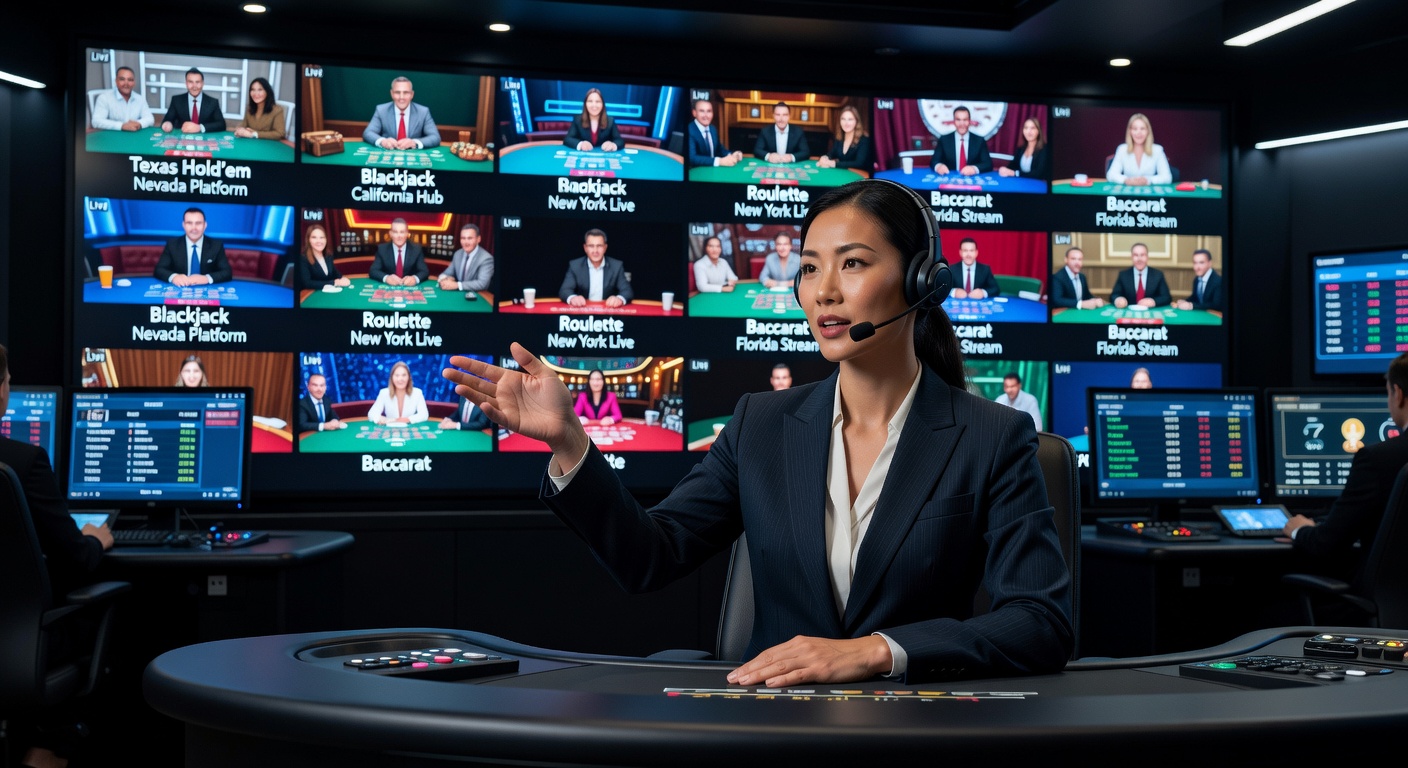
The Evolution of Live Dealer Multi-Tabling in Regulated US Markets
Live dealer games have transformed online casinos in states like New Jersey, Pennsylvania, Michigan, and Connecticut, where platforms such as BetMGM, DraftKings Casino, and FanDuel Casino integrate real-time streams from professional studios; operators there rely on multi-tabling techniques that allow single dealers to oversee up to eight blackjack tables or four roulette wheels at once, boosting efficiency without sacrificing the human touch that players crave. This setup, powered by advanced camera arrays and software overlays, emerged prominently after 2020 expansions in legal iGaming markets, and data from the New Jersey Division of Gaming Enforcement shows live dealer revenue climbing 45% year-over-year in 2024 alone, with multi-table operations handling over 60% of those sessions.
What's interesting is how quickly this caught on; early adopters like Evolution Gaming, the dominant provider in US studios, rolled out multi-table tech in Pennsylvania studios by late 2021, enabling dealers to rotate focus across games while software duplicates their actions in real time across player views. Players notice the seamless flow, and platforms report retention rates jumping 25% on live tables versus RNG versions, according to industry trackers.
Behind the Scenes: Technology Powering Dealer Juggling Acts
At the core of multi-table mastery lies sophisticated broadcast tech, where high-definition cameras capture a dealer's hands, chips, and cards from multiple angles, then AI-driven software splits the feed to synchronize identical actions on parallel tables; this means a single blackjack deal ripples out to six or more instances without delay, keeping latency under 200 milliseconds even during peak hours. Studios in Atlantic City and Philadelphia exemplify this, outfitted with robotic arms for card shoes and RFID trackers embedded in every chip, ensuring fairness verifiable by regulators in real time.
And it's not just blackjack; roulette wheels spin under dealer supervision for up to five tables simultaneously, while baccarat sessions stretch to four, all managed through ergonomic consoles that let dealers glance between monitors without breaking stride. Turns out, training plays a huge role—dealers undergo 40-hour simulations before going live, honing the ability to chat naturally across virtual audiences while shuffling decks flawlessly. Observers in the industry point to Playtech's US launches in Michigan, where multi-table yields 30% higher throughput per dealer shift compared to single-table norms.
Player Experience and Retention Boost from Multi-Table Streams

Players diving into these multi-table lobbies find shorter wait times—often under 10 seconds for a seat—paired with the thrill of shared energy from dozens betting alongside, even if the dealer's gaze shifts fluidly between tables; platforms like Golden Nugget in New Jersey highlight this with VIP multi-table rooms where high rollers track the same dealer across stakes from $5 to $5,000. Data indicates session lengths extend by 18 minutes on average, as bettors stick around for the social vibe reminiscent of Vegas floors, yet accessible via mobile apps anytime.
But here's the thing: interactivity amps it up further; chat features let players tip dealers or request side bets, fostering loyalty that translates to repeat visits, with one Michigan platform noting a 22% uptick in daily active users on live multi-tables post-2023 upgrades. Those who've studied player behavior observe how the human element—dealers bantering about hot streaks or wishing luck—cuts through the digital isolation of solo slots play.
Regulatory Oversight and State-Specific Implementations
Regulators across US iGaming states enforce strict protocols for multi-tabling, mandating continuous video audits and random integrity checks to prevent manipulation; in Pennsylvania, the Gaming Control Board requires dual-supervisor oversight during multi-table shifts, while Michigan's regulators cap table loads at seven for blackjack to maintain focus. This framework, refined through 2024 audits, ensures compliance with geofencing that blocks out-of-state access, and figures from state reports reveal zero major incidents tied to multi-table ops since inception.
Connecticut's nascent market, live since 2021, adopted multi-tabling aggressively via Foxwoods and Mohegan Sun partnerships, yielding $150 million in live dealer handle by 2025; West Virginia followed suit, integrating it into DraftKings' lineup where rural players tap into Philadelphia streams without travel. So, as expansions loom—Delaware eyes full multi-table rollout by early 2026—these models set precedents, balancing innovation with player safeguards.
Case Studies: Standout Platforms and Dealer Performances
Take BetMGM's Pennsylvania hub, where a single dealer named Alex handled 120 hands per hour across six Infinite Blackjack tables during a March 2025 peak, drawing 450 concurrent players and generating $2.3 million in wagers over one shift; metrics like that underscore the scalability, with sub-1% house edge preserved through certified shuffles. Or consider FanDuel's Michigan experiment, blending multi-table blackjack with game show hybrids like Crazy Time, where dealers juggle four streams plus a wheel segment, boosting cross-game play by 35% among users.
There's this case in New Jersey too, where Resorts Casino's Evolution studio set a record in late 2024: one roulette dealer oversaw five tables for 12 straight hours, fielding 8,000 spins with 99.8% uptime, all while engaging chats in English and Spanish. Experts who've analyzed these note the rubber meeting the road in training regimens—six-week programs emphasizing multitasking under simulated lag—turning novices into pros who sustain the pace without errors.
- BetMGM PA: 6 tables, 120 hands/hour peak.
- FanDuel MI: 4 streams + hybrids, 35% cross-play lift.
- Resorts NJ: 5 roulette tables, 8,000 spins/12 hours.
These examples highlight patterns; platforms sharing dealer stats publicly build trust, and players respond by wagering 15-20% more per session on verified multi-table pros.
Challenges, Innovations, and the Road to 2026
Multi-tabling isn't without hurdles—dealer fatigue surfaces after eight-hour shifts, prompting rotations every 45 minutes in top studios, and network glitches, though rare at 0.2% incidence, halt feeds instantly with RNG backups; yet advancements like 5G integration and edge computing slash latency further, paving smoother paths. What's significant is the push toward AI-assisted monitoring, already piloted in Nevada test beds for land-based hybrids, which could preview online expansions.
Looking ahead, March 2026 brings Michigan's planned audit of multi-table caps, potentially raising blackjack limits to nine tables amid revenue pressures from neighboring Ohio's sports betting surge, while Pennsylvania operators gear up for VR-enhanced multi-dealer lounges, blending up to 12 feeds in immersive pods. The American Gaming Association projects live dealer segments hitting $3.2 billion nationwide by then, fueled precisely by these efficiencies. It's noteworthy that workforce growth keeps pace—10,000 US dealer jobs projected by 2027—ensuring human dealers remain central even as tech evolves.
Conclusion
Multi-table mastery stands as a cornerstone of US online live dealer success, enabling platforms to serve thousands efficiently while delivering authentic casino vibes; from tech-driven studios juggling feeds without a hitch, to regulators fine-tuning safeguards, and players reaping shorter queues with richer interactions, the system thrives on balanced innovation. As 2026 unfolds with higher caps and VR twists, data points to sustained growth, solidifying live multi-tabling as the go-to for states chasing iGaming dominance. The ball's squarely in operators' courts now, ready to deal the next big hand.