7 Aug 2026
Decoding Interface Tweaks: How App Layout Changes Influence Game Selection Patterns Among US Casino Users
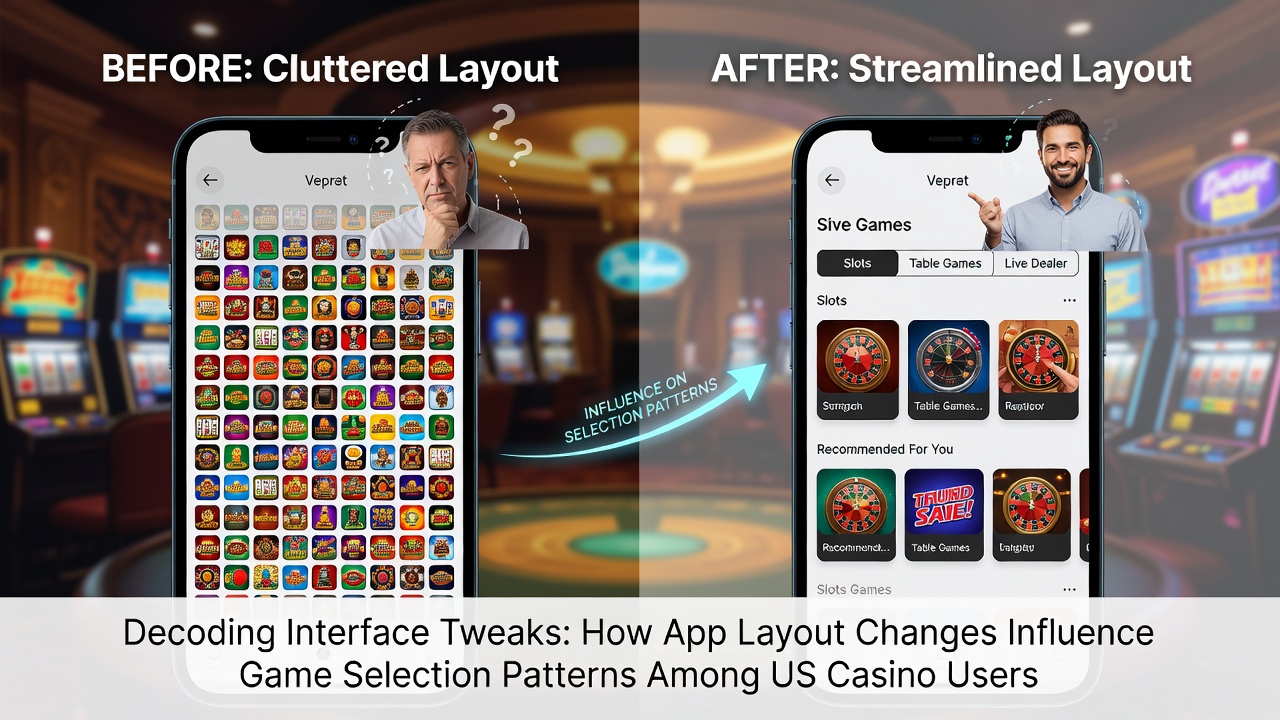
App developers in the US online casino sector have adjusted navigation menus, thumbnail sizes, and category placements over the past year, and these modifications correlate with measurable shifts in which games users choose to play. Data from multiple state-licensed platforms indicates that players spend less time scrolling when popular titles appear within the first two rows of a home screen, while secondary categories like table games receive fewer taps when buried deeper in the menu structure. Observers note that such tweaks emerged prominently during platform updates rolled out between late 2025 and August 2026, coinciding with expanded mobile igaming availability across additional states.
Core Elements of Casino App Layouts
Most US casino applications organize content through a bottom navigation bar that features home, games, promotions, and account sections, yet the order and visual weight of these elements differ across operators. Larger game thumbnails paired with prominent search bars encourage quicker selections of slots, whereas compact grids that prioritize filters for volatility or RTP draw attention toward table games and video poker variants. Researchers tracking user sessions found that when jackpot progressives occupy the top banner position, selection rates for those specific titles rise by noticeable margins compared with placements further down the feed.
Color schemes and animation speed also factor into engagement patterns, because brighter accent colors on certain game cards increase dwell time before a player taps through to the lobby. Those who've analyzed heatmaps across platforms report that users from different age groups respond differently to infinite scroll versus paginated results, with younger demographics completing more game launches under scroll-heavy designs.
Observed Shifts in Game Selection Data
Analytics compiled from platforms operating in New Jersey, Pennsylvania, and Michigan show that repositioning live dealer options from a secondary tab to the main games hub increased live blackjack sessions by double-digit percentages within the first month of the change. Conversely, when providers moved slot categories behind an additional filter screen, average daily spins per user declined until the layout reverted. Figures released through industry tracking services reveal that these adjustments influence not only initial choices but also session duration, because players who locate preferred games faster tend to extend playtime rather than exit the app.
Regional Patterns Across US Markets
State-specific regulations shape how aggressively operators test interface variations, since some jurisdictions require advance notification for any change that could affect player behavior. In markets where testing occurs more freely, A/B experiments demonstrate that adding quick-play buttons next to high-RTP slots boosts selection of those titles over lower-volatility alternatives. Users in states with newer igaming launches often encounter layouts that emphasize sports betting integration, and this cross-promotion leads to higher crossover rates between casino games and in-play wagers during evening hours.
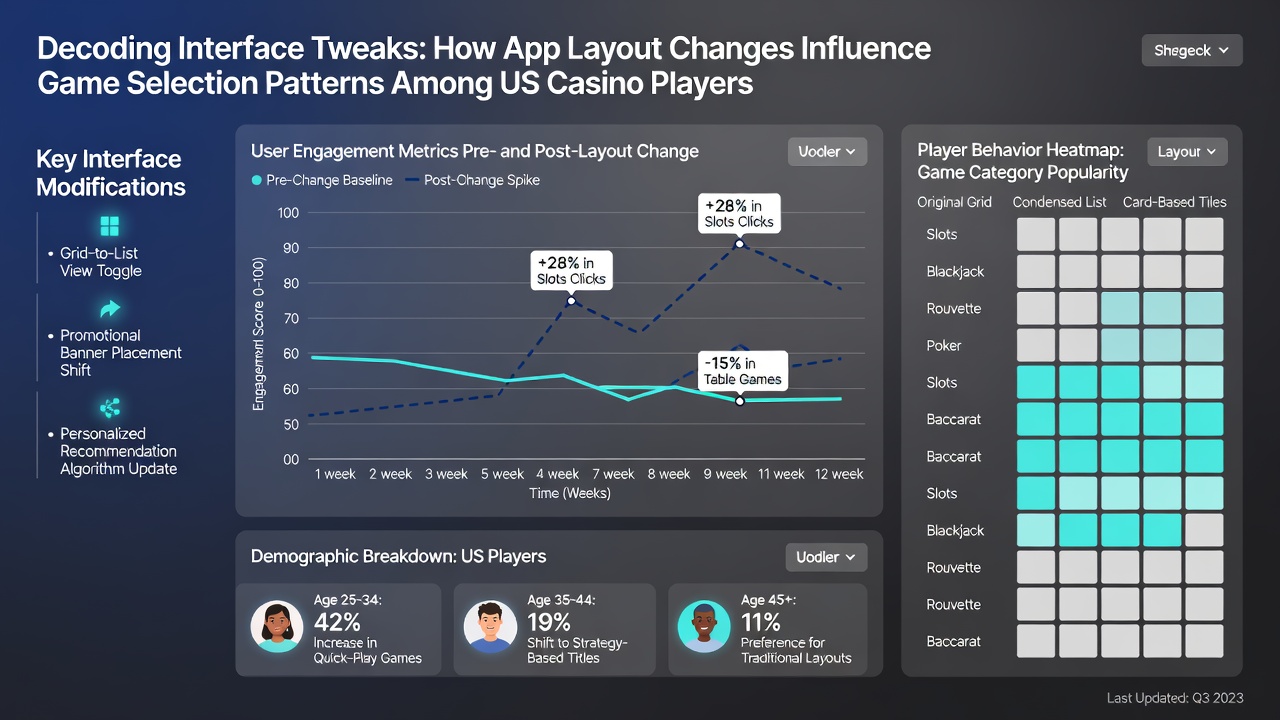
One study conducted by academic researchers at a major Midwest university examined anonymized session logs and determined that thumbnail size increases of 20 percent or more correlate with elevated selection of progressive jackpot slots, while smaller icons favor skill-based table games. These findings align with broader observations that visual prominence drives discovery when users open the app with no specific game in mind.
Impact of Recent Platform Updates in 2026
During August 2026 several major operators introduced dynamic home screens that rearrange based on individual play history, and early indicators suggest this personalization further concentrates selections around previously favored categories. Players who previously sampled multiple genres now show narrower patterns once algorithms prioritize familiar layouts, although some platforms counter this effect by inserting random discovery carousels at the top of the screen. External reports from the American Gaming Association document steady growth in mobile casino traffic during this period, with layout-driven changes cited as one contributing factor alongside expanded state approvals.
Another analysis from the Australian Gambling Research Centre compared US and international app designs and noted that US platforms tend to feature more prominent bonus round indicators within game thumbnails, which in turn steers selections toward titles with frequent bonus triggers. Such differences highlight how regional design preferences interact with user expectations formed through repeated exposure.
Conclusion
Interface modifications continue to shape how US casino users discover and select games, with measurable effects on session composition and category popularity. Ongoing data collection across licensed platforms will clarify which layout strategies produce sustained changes versus temporary spikes, particularly as more states finalize their igaming frameworks. Those monitoring these trends emphasize that operators balance visual appeal with regulatory requirements while adapting to evolving player navigation habits.