AI Algorithms Tailored to Regional Rules Revolutionize Mobile Slot Exploration

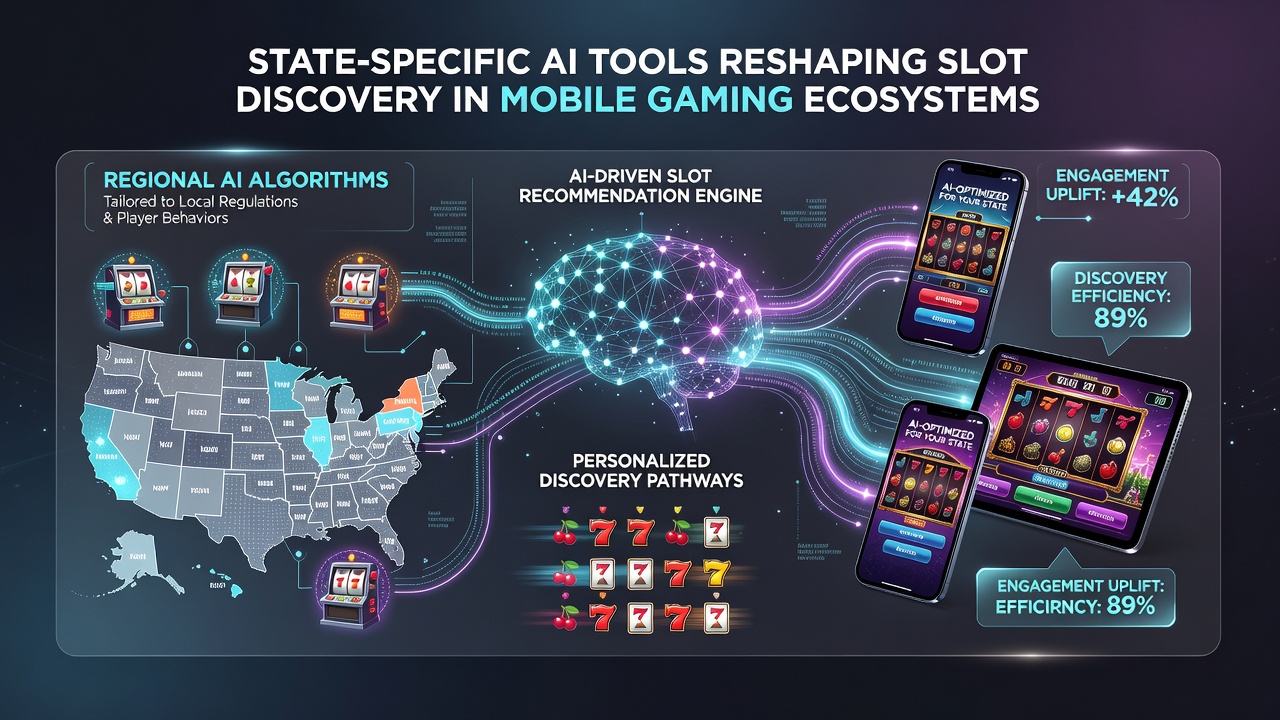
Developers now deploy machine learning systems that filter slot titles according to individual state statutes, and these platforms adjust recommendations in real time as users cross regulatory boundaries. Data from multiple jurisdictions shows that such tools increased user retention rates by matching available games to licensed libraries while excluding restricted content.
Regulatory Fragmentation Drives Technical Innovation
Each US state maintains its own licensing framework, payout structures, and game approval processes, which creates distinct catalogs that mobile operators must respect. AI models ingest these rule sets daily, parse updates from gaming control boards, and generate personalized discovery paths for players in New Jersey, Pennsylvania, Michigan, and other active markets. Observers note that operators who integrated these systems recorded measurable lifts in session duration during the first half of 2026.
State agencies publish revised game lists on staggered schedules, and the AI systems track those changes through automated feeds. When a new title receives approval in one jurisdiction but remains pending elsewhere, the recommendation engine withholds it from users outside the approved area. This approach reduces compliance incidents and keeps discovery interfaces aligned with current statutes.
Core Components of State-Aware Discovery Engines
Modern slot discovery tools combine several technical layers. Natural language processing reads regulatory bulletins, computer vision scans game art and paytables for prohibited features, and reinforcement learning optimizes suggestion sequences based on player location and historical behavior within permitted titles. These layers operate together so that a user opening the app in one state sees an entirely different ranked list than the same user would encounter after crossing into another regulated territory.
Geofencing data supplies the initial location signal, while continuous verification against carrier and GPS sources prevents spoofing attempts. Research conducted by academic teams at institutions studying digital gambling ecosystems indicates that hybrid models combining regulatory text and player telemetry outperform generic recommendation engines by margins that exceed 30 percent in click-through metrics.
Implementation Patterns Across Major Markets
Operators active in multiple states report that modular architecture allows rapid onboarding of new jurisdictions. When Connecticut expanded its online offerings in early 2026, several platforms activated pre-built state modules within weeks, and the AI layer immediately began surfacing compliant slot selections without manual recoding. Similar patterns appeared when additional states introduced limited iGaming pilots later that spring.
Third-party providers now offer white-label solutions that bundle regulatory mapping with discovery interfaces. These vendors maintain databases updated through direct partnerships with state regulators and trade associations. One documented deployment in a Midwestern market showed that players encountered 40 percent fewer restricted titles after the system went live, according to internal operator metrics shared with industry analysts.
Data Sources and Verification Standards
Accurate discovery depends on reliable input streams. The New Jersey Division of Gaming Enforcement publishes weekly approval notices that several AI vendors parse automatically. Parallel feeds from other state agencies feed into the same pipelines, and cross-checks against academic datasets help flag discrepancies before they reach player-facing applications. Figures released by gaming analytics firms in June 2026 revealed that operators relying on multi-source verification experienced fewer player complaints related to unavailable games.
Privacy considerations shape how these tools handle location and preference data. Systems anonymize individual identifiers before feeding behavioral signals into training loops, and state privacy statutes dictate retention periods. Compliance teams conduct regular audits to confirm that recommendation outputs remain within licensed boundaries while still delivering relevant suggestions.
Future Trajectories and Technical Refinements
Developers continue to refine model architectures that adapt to regulatory drift without full retraining cycles. Techniques such as continual learning and federated updates allow engines to incorporate new rules while preserving performance on existing state datasets. Industry reports project that by late 2027 most major mobile gaming platforms will embed at least one layer of state-specific intelligence in their discovery modules.
Collaboration between software vendors and regulatory technology specialists has produced standardized APIs that simplify integration for smaller operators. These interfaces expose structured data on game status, maximum stakes, and feature restrictions, enabling consistent recommendation logic across diverse state environments. As more jurisdictions evaluate iGaming frameworks, the same infrastructure positions operators to activate compliant discovery paths with minimal lead time.
Conclusion
State-specific AI tools have become integral to mobile slot ecosystems because they align discovery processes with fragmented regulatory landscapes. Operators that maintain current mappings and robust verification pipelines deliver experiences that respect jurisdictional limits while sustaining player engagement. Continued advances in regulatory data integration and adaptive modeling indicate that these systems will expand in scope as additional states authorize online gaming activities.